By Leigh Walker | Founder & CEO, Recruiterfy.ai
Every recruiting team knows the problem. A recruiter met a strong candidate six months ago, but the record was tagged inconsistently. The title in the ATS does not match the new role. The skills were described differently in the notes. The candidate is relevant, but the system does not surface them because the search logic depends on exact matches.
That is the downside of rigid keyword and tag-based discovery. It works best when the underlying data is perfect and the language never changes. Real recruiting data is rarely that neat.
Candidates describe their experience in different ways.
Recruiters summarize it in different ways.
Job titles vary by company.
Adjacent skills matter more than exact wording.
And the pace of role evolution keeps accelerating.
The World Economic Forum’s Future of Jobs Report 2025 says employers expect 39% of workers’ core skills to change by 2030. That should immediately make recruiters skeptical of title-first search. If skills are shifting that fast, then any search method that overweights yesterday’s labels will miss tomorrow’s fit.
This is where semantic AI matching becomes more valuable than simple tagging.
Instead of asking, “Does this profile use the exact same words as the job description?” semantic matching asks, “Does this candidate appear meaningfully aligned based on skills, experience, and context, even if the wording is different?”
Recent research supports this direction.
In a 2025 paper on resume-job matching, ConFit v2 outperformed prior methods including BM25 and OpenAI text-embedding-003, improving average recall by 13.8% and nDCG by 17.5% across ranking tasks. In separate 2024 research on skill extraction from job postings, researchers described large language model approaches as improving the accuracy and adaptability of extracting skills from unstructured recruiting text.
These are research results, not universal guarantees. But they point in the same direction: when recruiting data is messy, semantic and LLM-based methods can outperform rigid lexical search.
LinkedIn’s 2025 Future of Recruiting report reinforces the practical business case. It found that 93% of talent acquisition professionals believe accurately assessing candidate skills is critical to quality of hire, and companies with the most skills-based searches were 12% more likely to make a quality hire.
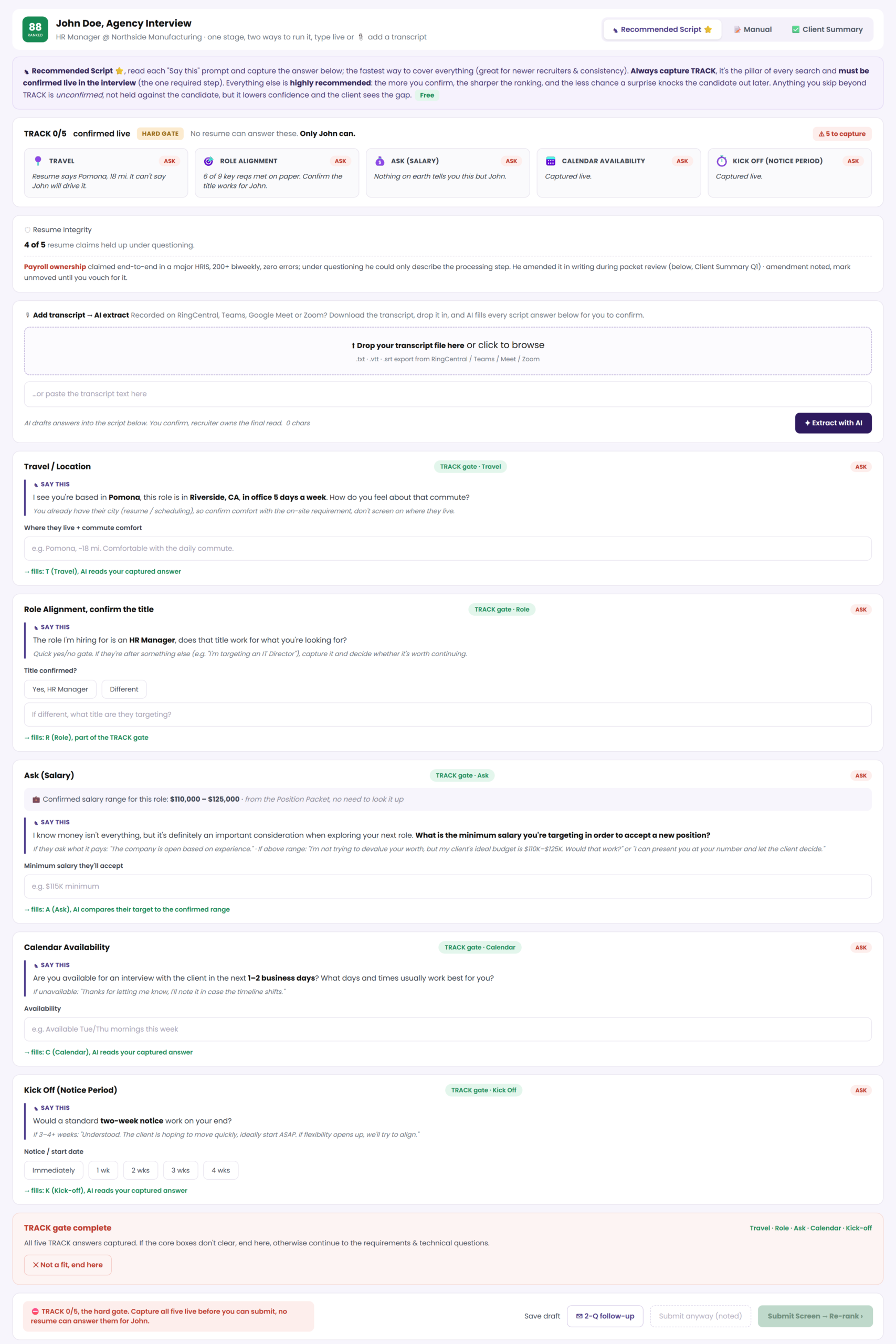
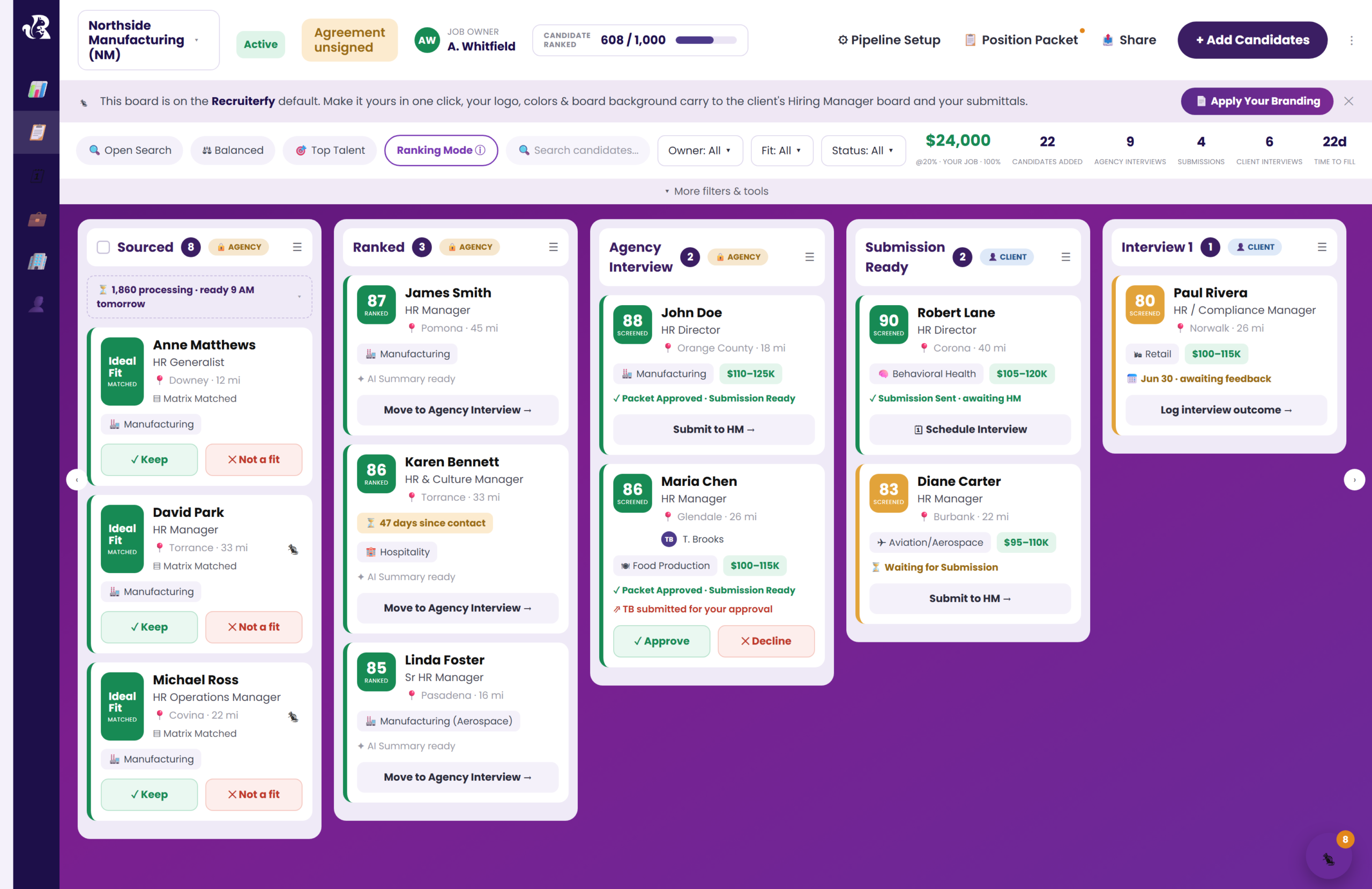
That is exactly the logic behind Recruiterfy’s AI-driven candidate matrix.
Recruiterfy is designed to look past brittle tag logic and help surface aligned candidates based on broader fit signals. That includes direct matches, adjacent experience, transferable strengths, and the kinds of contextual similarities that are easy for recruiters to spot manually but hard for old search workflows to catch consistently at scale.
This matters in three common recruiting situations.
First, candidate rediscovery. You already know the person, but the record is not tagged perfectly.
Second, adjacent-role hiring. The candidate has not held the exact same title, but the underlying capability matches.
Third, evolving skill demand. The role has changed faster than your taxonomy has.
None of that means tags should disappear. Structured fields still matter. Good taxonomy still matters. Recruiter discipline still matters. But tags should support discovery, not limit it.
The best search experience in recruiting is not “keyword or AI.” It is structured data plus semantic understanding plus recruiter judgment.
Recruiterfy is built around that idea. The platform helps bring semantic ranking into the real recruiting workflow, so teams can find people who are actually relevant instead of just textually similar.
In a market where titles drift, skills evolve, and data is always a little messy, that is not a luxury feature.
It is the difference between a system that stores candidates and a system that helps you find them.
One hundred founding teams get Recruiterfy at the best rate we will ever offer, with a
live founder session every week. Admission is by application, and we cap how many
firms we admit per specialty and region.
Qualify for the Founders Club
Not sure yet? Join the Waitlist for launch updates, early product previews.