By Leigh Walker | Founder & CEO, Recruiterfy.ai
Time to fill still matters. But for recruiting teams, one of the most controllable speed metrics is time to shortlist.
SHRM’s 2025 benchmarking found the median time to fill is still about a month and a half for both executive and nonexecutive roles. That number matters, but it is also too broad to manage well day to day. Recruiters and hiring leaders need a metric earlier in the funnel that tells them whether the search is actually moving.
That is where time to first qualified shortlist becomes powerful. If a team can get to a credible shortlist faster, interviews start sooner, hiring manager confidence rises earlier, and weak-fit candidates are less likely to clog the process.
AI-driven ranking helps because it reduces one of the biggest hidden delays in recruiting: manual candidate triage. Bullhorn found recruiters spend 14.6 hours per week searching for the right candidates. LinkedIn found talent professionals using generative AI report an average 20% reduction in workload. Those two findings point to the same operational truth, the faster teams can sort signal from noise, the faster they can move.
The strongest ranking systems do more than scan for keywords. They compare candidates against fuller job context, including company information, must-haves, role requirements, and the actual job description. That helps teams prioritize aligned candidates earlier, even when the resume language is not perfectly identical to the req.
That is especially important now because candidate volume is rising while reliability is getting harder to judge. Greenhouse found 28% of candidates admit using AI to generate fake work samples. Recruiters need a better first-pass model than title matching and gut feel alone.
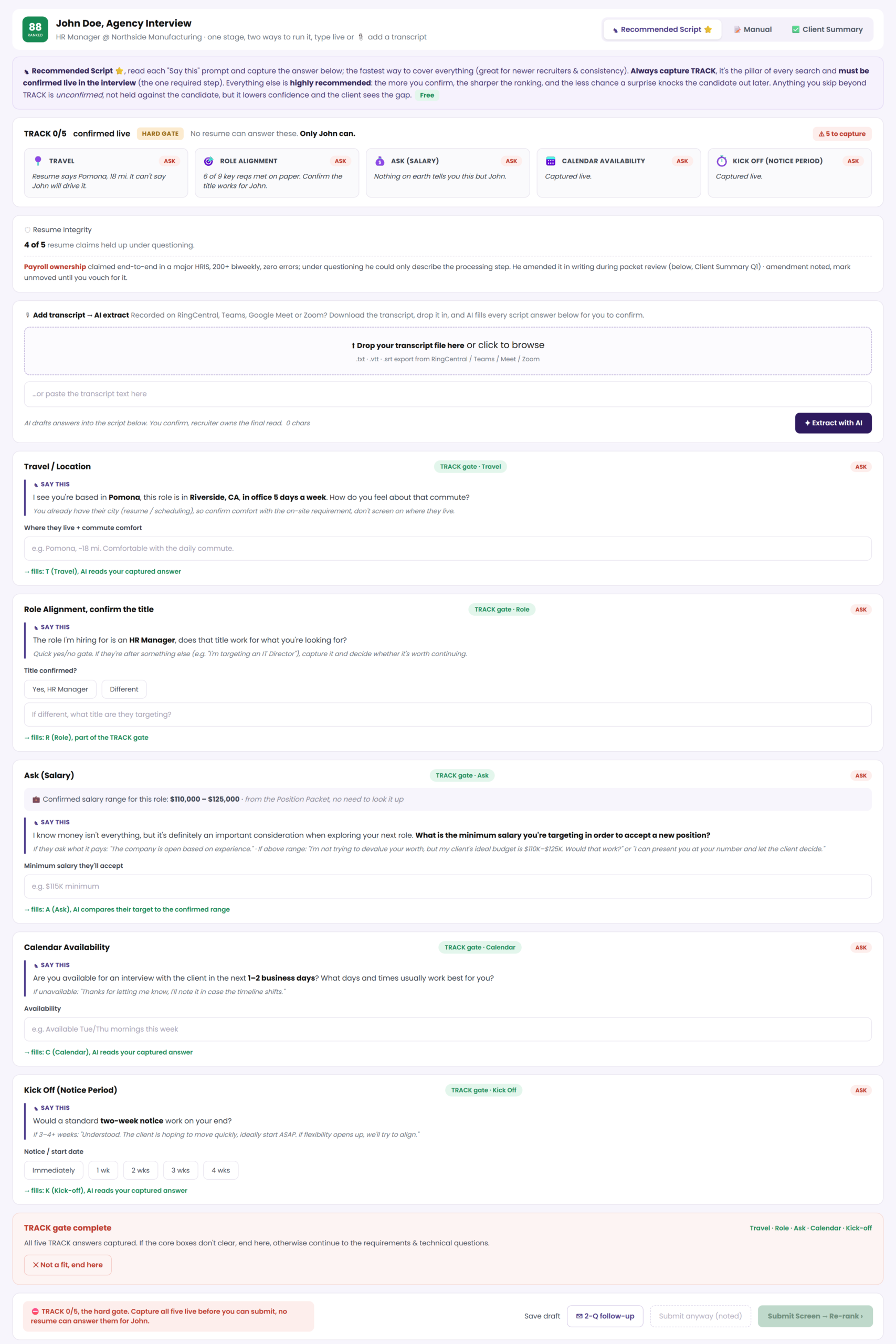
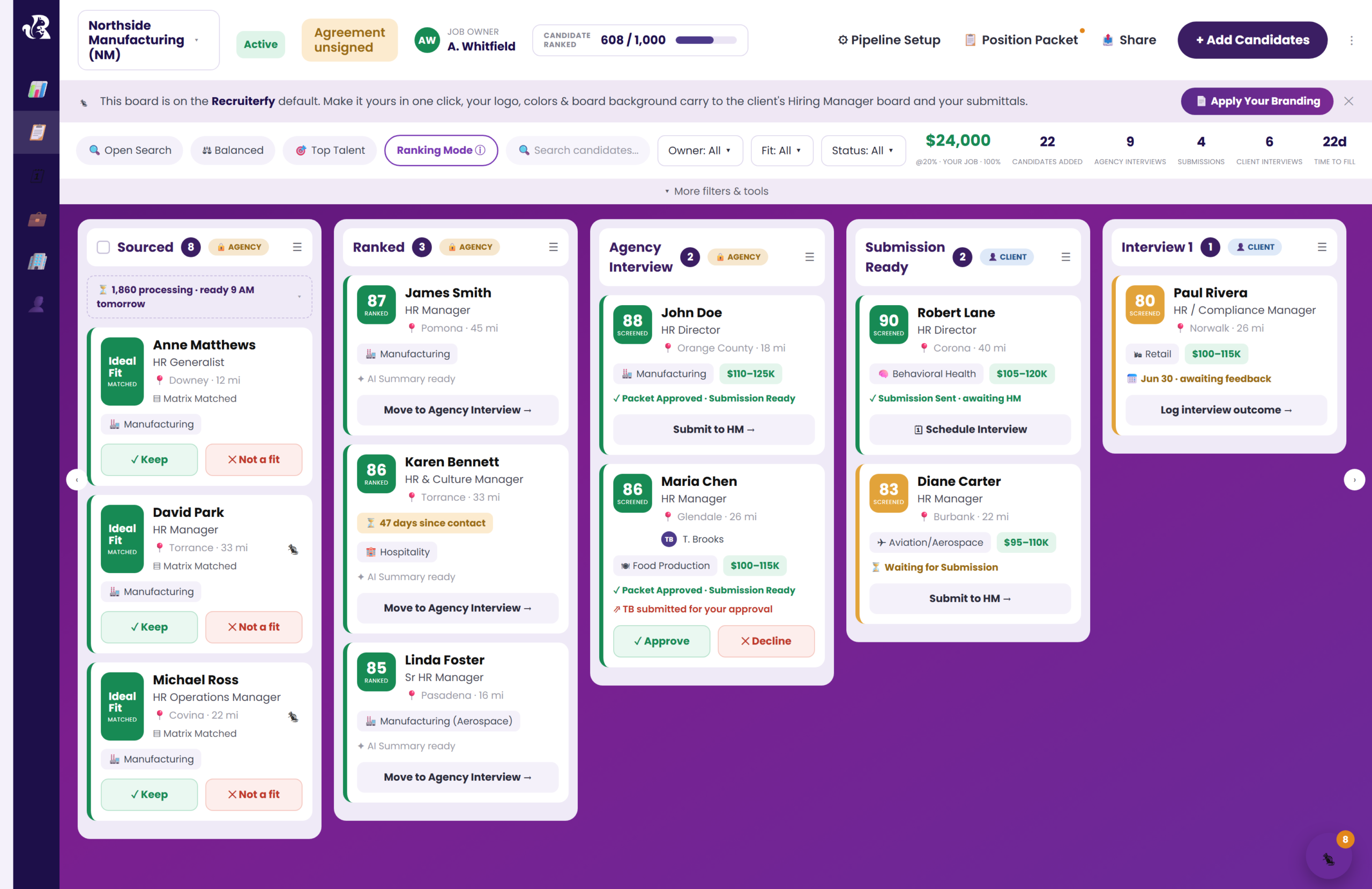
AI-driven ranking also gets stronger when it happens in stages. Recruiterfy does not stop at resume-to-role scoring. It updates the ranking as new evidence is added, including prescreen responses, technical answers, and structured feedback. That creates a better shortlist because the ranking becomes more informed as the process progresses.
This is one reason time to shortlist is a better commercial story than generic automation claims. It connects directly to the work hiring managers feel. They do not just want activity. They want a shortlist they can trust, delivered quickly enough to keep momentum.
Bullhorn’s 2025 Industry Trends data supports the broader point. Agencies that automated searching for candidates were 50% more likely to have average placement times under 20 days, and those that automated candidate screening were 94% more likely to do the same. Employ’s 2025 Recruiter Nation Report also found 55% of teams using AI reported faster time to hire.
That does not mean ranking replaces the recruiter. It means the recruiter starts from a stronger position. Instead of spending the first stretch of the search trying to figure out where to begin, the recruiter begins with a clearer order of operations and better evidence behind it.
For agencies, that means faster delivery and stronger client trust. For in-house teams, it means less time lost between intake and first review. For both, it means a better chance of moving the right candidates forward before momentum fades.
That is why Recruiterfy is built around ranking as an operational layer, not a cosmetic feature. The goal is simple: reduce the time it takes to get from raw candidate volume to a shortlist worth reviewing.
One hundred founding teams get Recruiterfy at the best rate we will ever offer, with a
live founder session every week. Admission is by application, and we cap how many
firms we admit per specialty and region.
Qualify for the Founders Club
Not sure yet? Join the Waitlist for launch updates, early product previews.