By Leigh Walker | Founder & CEO, Recruiterfy.ai
AI in recruiting is no longer a fringe topic. It is becoming part of how serious teams operate. SHRM found AI adoption in HR tasks rose to 43% in 2025, up from 26% in 2024. LinkedIn also found that talent professionals already using generative AI report an average 20% reduction in workload.
But adoption alone is not the point. Plenty of teams are experimenting with AI and still not seeing better hiring outcomes. The difference usually comes down to one question: where exactly is AI helping inside the workflow?
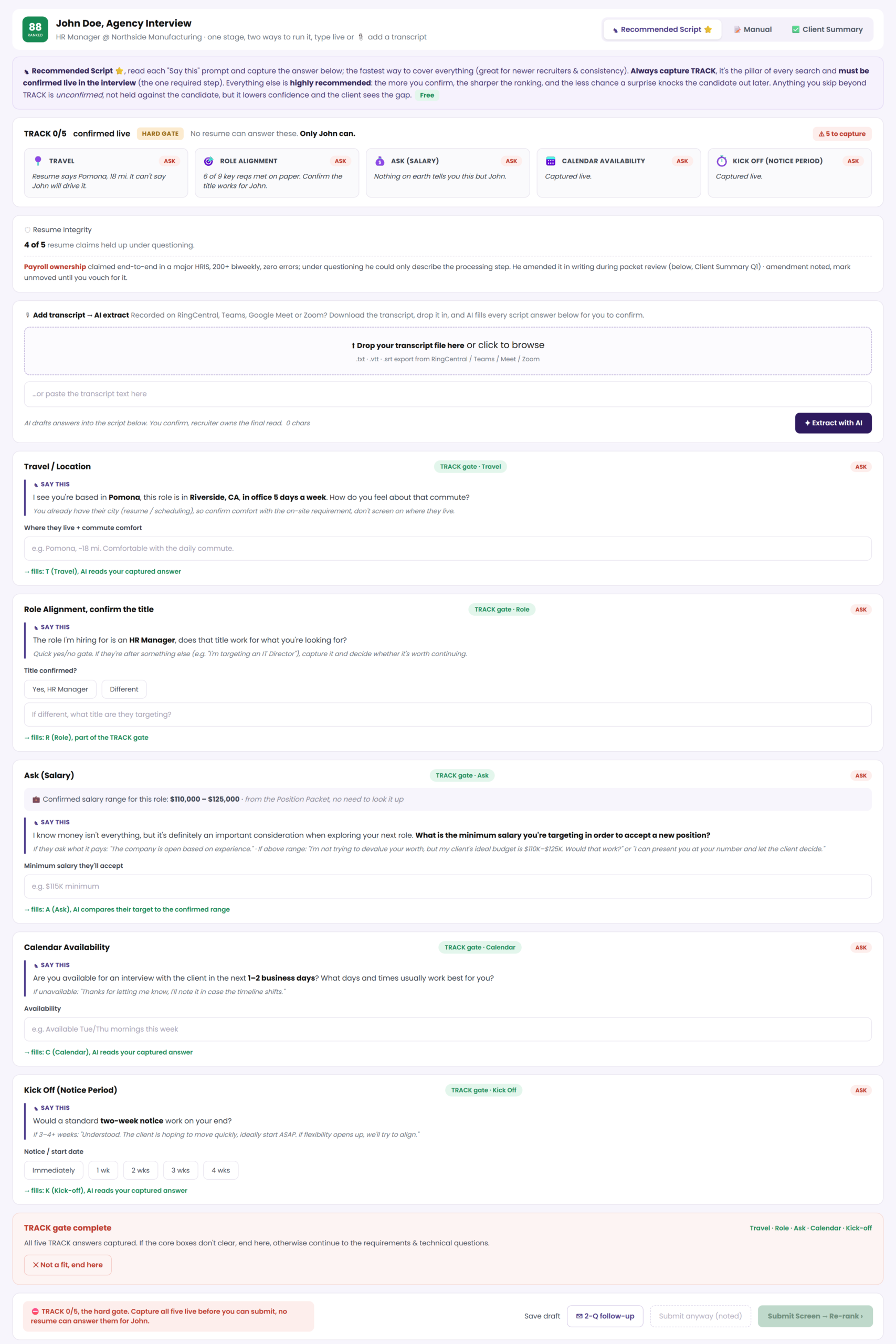
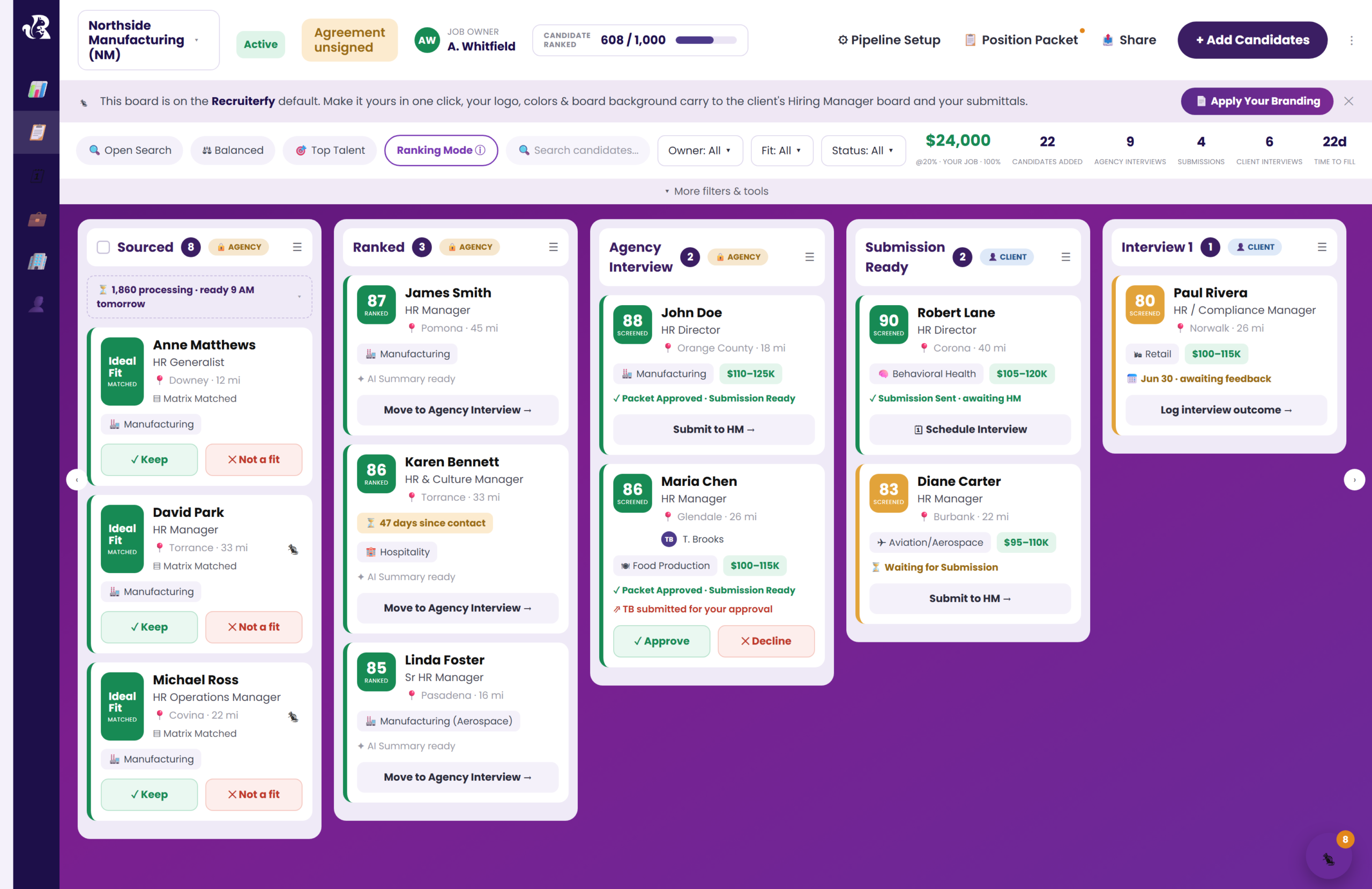
For agencies, the best use cases are usually the ones that protect recruiter capacity and improve delivery quality. That includes turning messy role intake into a stronger job brief, ranking candidate pools against real role context, running structured first-pass screens, generating clean recruiter-ready summaries, and making it easier for clients to review shortlists quickly.
For in-house teams, the strongest use cases are often similar. AI should help standardize hiring manager intake, reduce early-stage admin, improve candidate comparisons, and create a more consistent hiring process across recruiters and stakeholders.
Where teams get into trouble is when AI is treated like a black box. That approach creates two problems. First, recruiters do not trust outputs they cannot explain. Second, candidates and hiring managers lose confidence when the process feels automated but not accountable.
That is why structured AI matters. Recruiterfy is built around structured inputs, stage-based ranking, and human control. The platform starts with stronger job setup through the Position Packet, ranks candidates against fuller context, adds Structured Prescreen evidence for a sharper rerank, and keeps the recruiter in charge of who moves forward.
This matters even more because candidate behavior is changing. Greenhouse found 45% of candidates use AI to prepare for interviews, while 28% admit using AI to generate fake work samples. In that kind of market, teams need better signals, not looser screening.
At the same time, Bullhorn found 77% of candidates who interacted with AI in a recruiting process had a positive experience. Used well, AI does not have to make recruiting feel colder. It can make the process faster, more responsive, and more consistent.
So what should AI do in a modern recruiting workflow?
It should improve role clarity, prioritize candidate fit, create structure in first-pass screening, reduce repetitive note-taking, support better collaboration, and preserve an auditable trail of why candidates were advanced. It should not replace relationship-building, persuasion, final judgment, or employer brand.
That is the practical standard agencies and in-house teams should use in 2026. Do not ask whether a tool has AI. Ask whether it improves the work that slows your team down, whether your recruiters can explain its outputs, and whether it helps build shortlists hiring managers actually trust.
AI is not the strategy. Better recruiting operations are the strategy. AI should simply make that operating model faster, clearer, and more repeatable.
One hundred founding teams get Recruiterfy at the best rate we will ever offer, with a
live founder session every week. Admission is by application, and we cap how many
firms we admit per specialty and region.
Qualify for the Founders Club
Not sure yet? Join the Waitlist for launch updates, early product previews.