By Leigh Walker | Founder & CEO, Recruiterfy.ai
Most recruiting slowdowns do not come from one dramatic problem. They come from five repeat bottlenecks that quietly compound across every search.
The first is application overload without enough signal. More resumes in the funnel should make hiring easier. Instead, it often creates more noise. Greenhouse reported that applications per role rose from an average of 28 in 2021 to 95 in 2025, a 239% increase. At the same time, SHRM found that 69% of organizations still struggle to fill full-time roles. More volume is not the same as more fit.
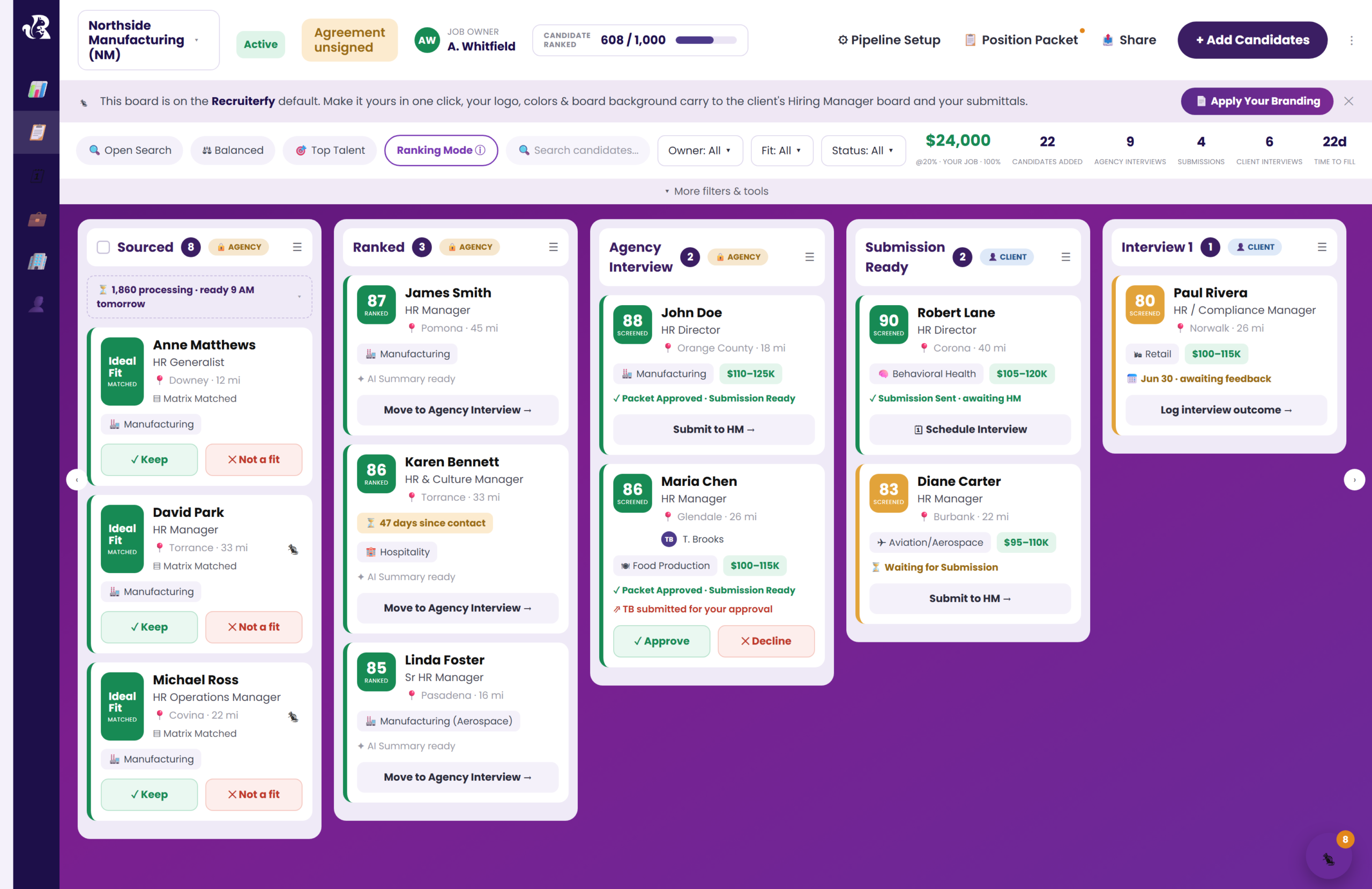
The second bottleneck is manual search and match. Bullhorn found recruiters spend 14.6 hours per week searching for the right candidates. That is a major share of the workweek tied up in hunting, filtering, and second-guessing instead of moving strong candidates forward.
The third bottleneck is inconsistent first-pass screening. One recruiter asks thorough questions. Another writes thin notes. A third moves too fast because the req load is heavy. In a market where Greenhouse found 28% of candidates admit to using AI to generate fake work samples, first-pass evaluation has to be more structured, not less.
The fourth bottleneck is recruiter time disappearing into admin. LinkedIn found talent professionals using generative AI report an average 20% reduction in workload. That matters because recruiters should be spending time calibrating with hiring managers, responding to candidates, and closing high-fit talent, not reformatting resumes and rewriting the same notes over and over.
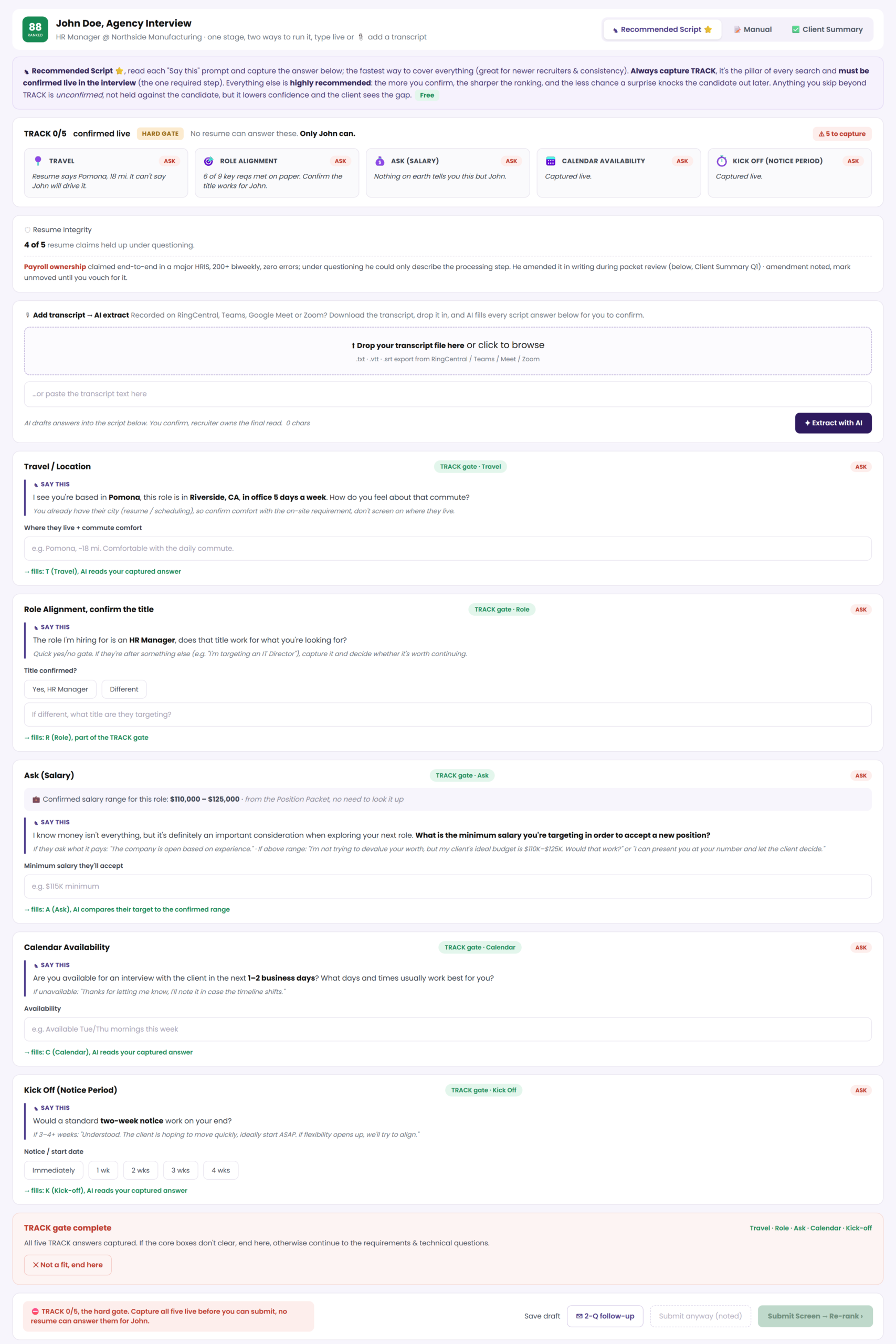
The fifth bottleneck is messy handoffs and fragmented feedback. Once a shortlist leaves the recruiter, many teams still rely on scattered email threads, inconsistent scorecards, and verbal reactions that are hard to compare later. That slows decisions and weakens accountability, especially when recruiters are already carrying high req volumes.
This is where a lot of AI conversations go wrong. The goal is not to automate the human side of recruiting. The goal is to remove the friction that prevents recruiters from doing their best human work.
AI should help standardize job context, rank candidates against real requirements, run structured first-pass screens, summarize the reasons a candidate fits, and capture feedback in a way that can actually be reused. It should not replace recruiter judgment, relationship-building, or final decision-making.
That is the model Recruiterfy is built around. Position Packets create stronger role context up front. Candidate ranking helps teams prioritize faster. Structured Prescreens create more consistent first-pass evidence. Candidate summaries and shareable review links make it easier for hiring managers to respond with real signal instead of scattered opinion.
The practical question is not whether AI belongs in recruiting. It already does. The better question is whether it is removing real bottlenecks or just adding another layer of software.
The teams that win will be the ones that use AI to reduce noise, tighten workflow, and give recruiters more time for the work that actually changes hiring outcomes.
Most recruiting slowdowns do not come from one dramatic problem. They come from five repeat bottlenecks that quietly compound across every search.
The first is application overload without enough signal. More resumes in the funnel should make hiring easier. Instead, it often creates more noise. Greenhouse reported that applications per role rose from an average of 28 in 2021 to 95 in 2025, a 239% increase. At the same time, SHRM found that 69% of organizations still struggle to fill full-time roles. More volume is not the same as more fit.
The second bottleneck is manual search and match. Bullhorn found recruiters spend 14.6 hours per week searching for the right candidates. That is a major share of the workweek tied up in hunting, filtering, and second-guessing instead of moving strong candidates forward.
The third bottleneck is inconsistent first-pass screening. One recruiter asks thorough questions. Another writes thin notes. A third moves too fast because the req load is heavy. In a market where Greenhouse found 28% of candidates admit to using AI to generate fake work samples, first-pass evaluation has to be more structured, not less.
The fourth bottleneck is recruiter time disappearing into admin. LinkedIn found talent professionals using generative AI report an average 20% reduction in workload. That matters because recruiters should be spending time calibrating with hiring managers, responding to candidates, and closing high-fit talent, not reformatting resumes and rewriting the same notes over and over.
The fifth bottleneck is messy handoffs and fragmented feedback. Once a shortlist leaves the recruiter, many teams still rely on scattered email threads, inconsistent scorecards, and verbal reactions that are hard to compare later. That slows decisions and weakens accountability, especially when recruiters are already carrying high req volumes.
This is where a lot of AI conversations go wrong. The goal is not to automate the human side of recruiting. The goal is to remove the friction that prevents recruiters from doing their best human work.
AI should help standardize job context, rank candidates against real requirements, run structured first-pass screens, summarize the reasons a candidate fits, and capture feedback in a way that can actually be reused. It should not replace recruiter judgment, relationship-building, or final decision-making.
That is the model Recruiterfy is built around. Position Packets create stronger role context up front. Candidate ranking helps teams prioritize faster. Structured Prescreens create more consistent first-pass evidence. Candidate summaries and shareable review links make it easier for hiring managers to respond with real signal instead of scattered opinion.
The practical question is not whether AI belongs in recruiting. It already does. The better question is whether it is removing real bottlenecks or just adding another layer of software.
The teams that win will be the ones that use AI to reduce noise, tighten workflow, and give recruiters more time for the work that actually changes hiring outcomes.
One hundred founding teams get Recruiterfy at the best rate we will ever offer, with a
live founder session every week. Admission is by application, and we cap how many
firms we admit per specialty and region.
Qualify for the Founders Club
Not sure yet? Join the Waitlist for launch updates, early product previews.